
The Twelve Months Sanctified by Prayer: November, Month of the Souls in Purgatory by M. L’ABBE A. RICARD, D.S.G. Translated from the French. 1877 November 6 REMEMBRANCE OF SIN.
.
Prelude.
.
A dull and unbearable sadness has. taken possession of the imprisoned souls ; their memory is like a piercing sting.
.
Meditation.
.
Another thought increases the: sufferings of the souls in Purgatory, it is the cause of their temporary exclusion from heaven. They know that their disgrace is only caused by their offences against a God of infinite love, a God to Whom they owed infinite gratitude and obligations, a God Whom they love above all things in the midst even of their torments, and that thought must be the cruellest of their executioners. It depended on themselves not to wander from God, Who desired to welcome them to His paradise immediately after their death, if they had not themselves closed the gate.
“Where is our God,” they cry, our loving God, Who is now justly incensed against us, and punishes our ingratitude by veiling His countenance, banishing us from His presence, and detaining us in a horrible prison, where we burn with the same fire which consumes our enemies in hell.
What increases still more the pain of their reproachful conscience is when they consider the false, fleeting, and often shameful pleasures which they preferred to the pure, solid, and eternal joys of heaven. Must thou then, O my soul, forfeit for nothing so many degrees of glory, which thou wilt lose, without, perhaps, the hope of ever regaining them. Thou pre parest thyself joyfully for long years of mourn ing in Purgatory, whilst it is in thy power to acquire a right to a speedier entrance into eternal glory.
.
Resolution.
.
Remember often the sorrowful expectation of Purgatory to encourage ourselves in the practice of perfection.
.
Aspiration.
.
“ See how hard and bitter it is for thee to have abandoned the Lord thy God” (Isaias.)
.
EXAMPLE: THE TRIBUTE OF THE DEAD.
.
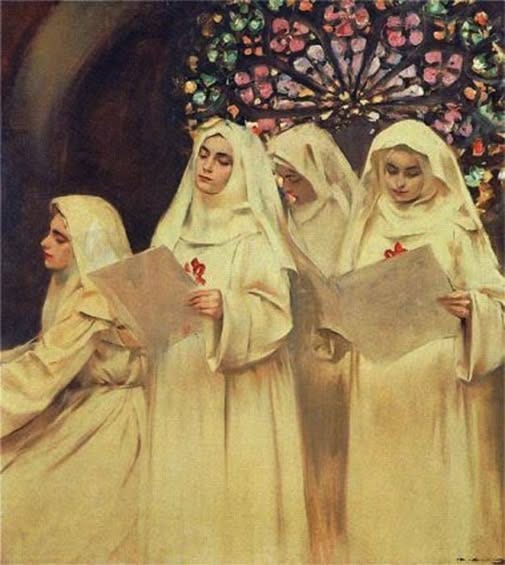
There was a pious habit in the Convent of St. Catherine at Naples of ending the day with Vespers for the Dead, recited in the dormitory. One day that the nuns had been occupied the whole day, up to the last minute, on very urgent work, they retired to rest without paying their accustomed tribute to the dead. Whilst they were asleep as many angels as there were religious appeared in the dormitory, and having placed themselves in two ranks, sang with celestial harmony the Office which the nuns had omitted. One of the sisters, who alone was watching at that hour, the venerable Paula of St. Theresa, thinking she heard the chanting of her sisters, left her cell in great haste to unite her voice to theirs. Her astonishment was great when she saw these heavenly spirits chanting the Vespers of the Dead, so that the souls in Purgatory might not be deprived of the help obtained from this Office. The servant of God felt her love and charity increase towards the holy souls; and when she had told her companions of this wonderful event they made the resolution of never again omitting, through their own fault, the recitation of this Office. (Life of the Venerable Paula.)